


Is anyone actually learning with AI?
The answer is probably yes, but based on what I’ve seen amongst my peers and the way I personally use tools today I would bet that the large majority lean towards no.
But why is that?
I believed that it was a convenience issue, that the right systems or tools didn’t exist that made it as easy to use AI for learning as it is to use it for quick answers.
My hypothesis was that if the experience was good enough, the learning would follow.
Say Hello to
Slate is the manifestation of this belief. A mission to leverage modern tools to truly optimize the way students learn.
My journey with Slate started when Daniel and Hatem came to me with an idea to combine knowledge graphs with deep context about what a student is learning to create personalized learning experiences.
Not another app that quizzes you and moves on, but a platform that knows exactly where you are and why you’re stuck. I immediately said yes.
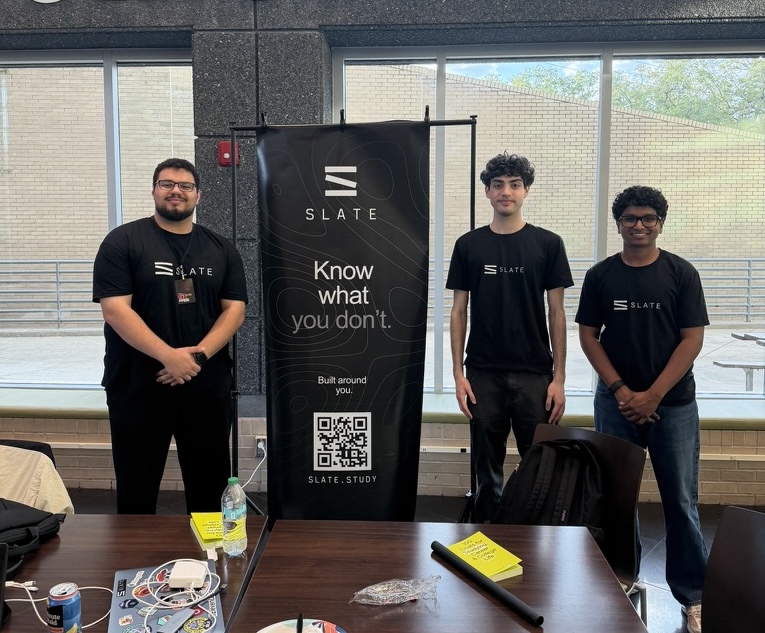
I didn’t come from a technical background, so I spent my time designing what the experience of the app would look like. We had many brainstorming sessions on Discord’s whiteboard feature coming up with designs.
To us, Slate needed to be a place you went, not just another dashboard or list of assignments you glance at. Something closer to a game than a to-do list.
This turned into this


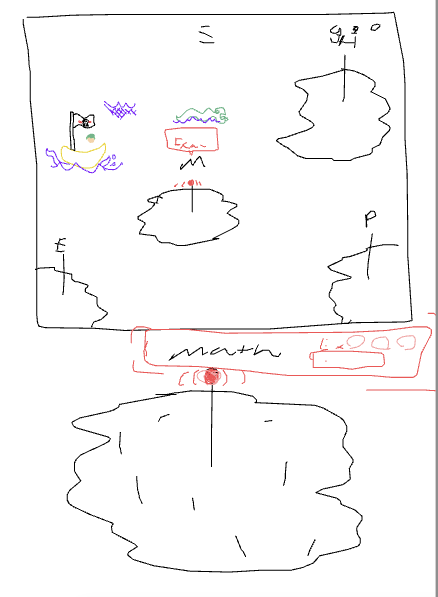
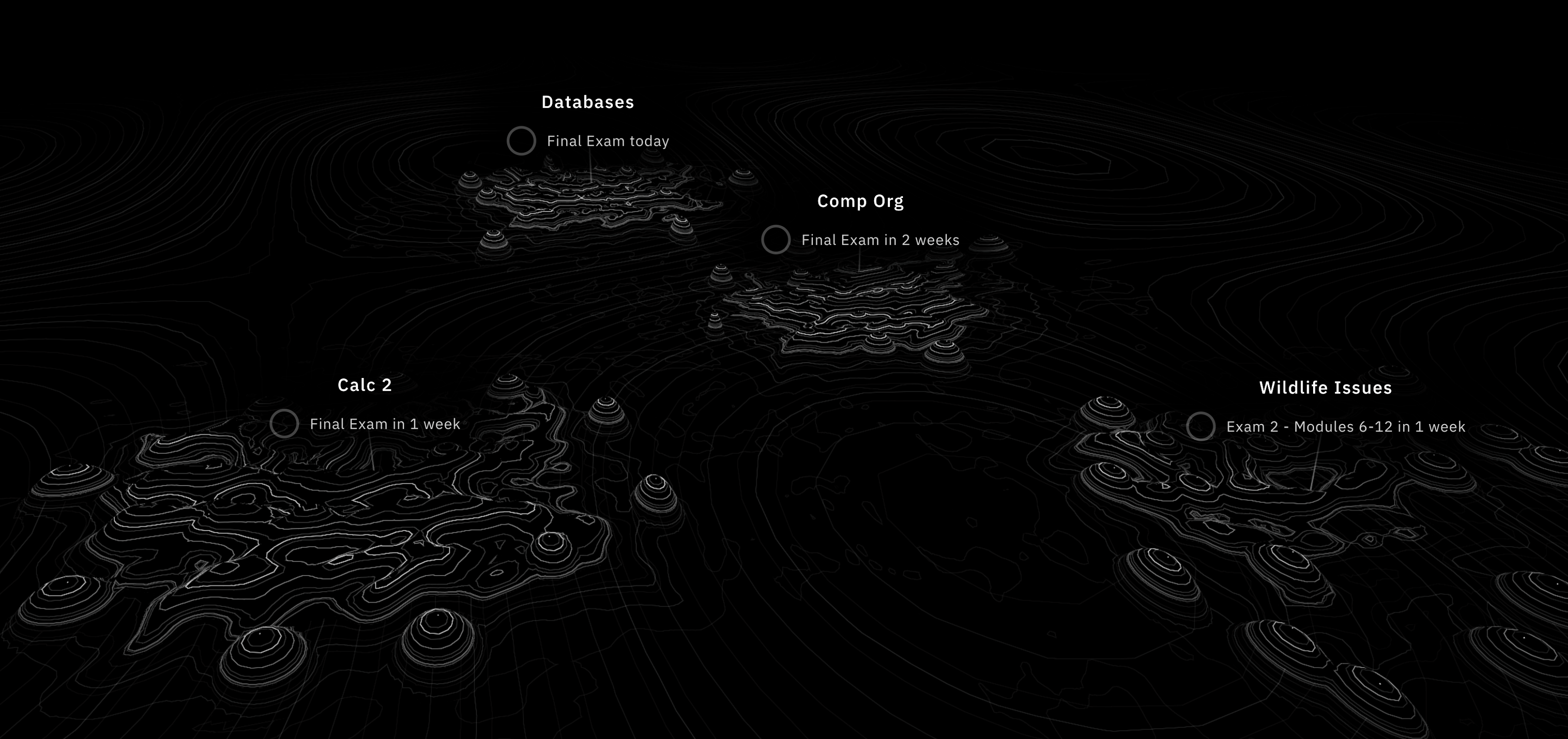
A month later, with a mix of excitement and nerves, we debuted at Hack-a-Bull, USF’s annual hackathon. People were blown away with how it look and felt. What we didn't get much of was anyone asking how it actually worked, which, looking back, should have told us something much earlier than it did. At the time, we just took the enthusiasm as a green light and kept grinding.
The Summer
We spent the summer iterating, and honestly, it was one of the most enjoyable stretches of my life. As we continued to show Slate to students, we consistently saw that people were impressed with the design but not the actual value of the product. Funny enough, when we would fill out applications for funding, we would always pause at the question “What problem are you solving?”, an answer that should have been immediate for us.
We had to take a hard look in the mirror and ask if we were solving a real problem, or if we were trying to find one that Slate solves.
We’re not approaching Slate as a business anymore and it's a project we still grow passively, in the background, while we figure out what it actually wants to be. While Slate hasn’t panned out as we originally thought, it was a real learning experience.
Thank you Danny and Hatem, and for anyone who made it this far. Visit slate.study.